

Ever heard of Tantra, Sex Geek?
One of the reasons I think people get curious about Tantra and Sacred Sexuality is because, deep down, many of us suspect there has to be more available to us than just “go through the motions” grind and groan intimacy.
There must be some way to create:
More connection.
More sensation.
More spark.
More feeling.
But then we try reading about Tantra and suddenly it feels like we accidentally wandered into a new age, wizard convention. 😅
So, for those of you new to Tantra (and those of you who have your black belts in woo-woo who’re trying to connect with your skeptic friends!), let me give you 3 quick tips about sacred sexuality that might help, whether or not you ever eye-gaze with another’s third eye… 👀
✨ Tip #1: Sometimes your brain needs “new language” and new movements to break old patterns
One of the sneaky reasons people become interested in Tantra, Taoist sexual practices, kink, roleplay, ecstatic dance, meditation, or even learning another language is because stepping outside your normal day-to-day routines can wake your brain back up.
New vocabulary, new frameworks, and putting your body into new positions can interrupt autopilot.

Instead of:
“Same partner. Same couch. Same stress. Same habits.”
Your brain suddenly goes:
“Ooooh… what’s THIS?”
Even playful new ideas can help people temporarily step outside “work mode,” “parent mode,” or “task list mode” and reconnect with curiosity, novelty, embodiment, and desire.
Sometimes the magic isn’t the mystical system itself…
Sometimes the magic is finally giving yourself permission to experience something differently.
✨ Tip #2: A lot of “mystical” practices are actually body techniques wearing fancy hats

Here’s a dirty little secret:
Many esoteric systems are really collections of breathing skills, attention-focusing exercises, touch awareness, nervous system regulation, trance states, and communication techniques stacked on top of each other.
The jargon isn’t automatically bad. English honestly struggles to describe nuanced, emotional, ecstatic, and deeply embodied experiences.
BUT…
Sometimes the language can accidentally become gatekeeping.
People hear words like “chakra,” “kundalini,” or “energetic polarity” and assume:
“Well… I guess that’s not for normal humans like me.”
Meanwhile, underneath the vocabulary, there are often very practical body-based skills that many people can learn and benefit from.
✨ Tip #3: You don’t have to believe in something to experiment with it

I don’t have to “believe” in “sexual energy” or Root Chakras to see what Tantra has to offer me.
I don’t have to believe in the internet to send an email.
In fact, I could loudly insist the internet isn’t real while still accidentally replying-all to everybody. 😄
When electricity and lightbulbs first appeared, many people thought they were practically magic.
Personally, I LOVE skeptical, evidence-based, peer-reviewed science.
And when I encounter something that doesn’t yet fit neatly into my understanding, I often place it into what I jokingly call my “mystical bucket.”
Not because I automatically believe it…
But because sometimes trying an experience helps me understand it better than arguing about it from the sidelines.
Sometimes the fastest way to decode the “woo-woo” is to safely explore the practice itself and notice what actually happens in your body, attention, emotions, breathing, connection, or nervous system.

✨ Bonus Tip: Cultural appropriation is real. Please don’t strip-mine traditions.
One of the things I care deeply about when teaching Tantra and Sacred Sexuality is acknowledging that many of these ideas come from cultural and spiritual traditions that deserve respect.
Borrowing ideas while erasing the people, histories, and contexts they came from is kinda crappy human behavior.
You don’t need to become an expert in every lineage…
But humility, curiosity, respect, and giving credit matter.
Part of being a good student — and a good human — is learning without pretending we invented everything ourselves.
Which is also why I try very hard to teach these topics in grounded, practical, accessible ways without claiming to be a guru floating down from the mountains with magical answers. 😉
That spirit is a BIG part of why I created:
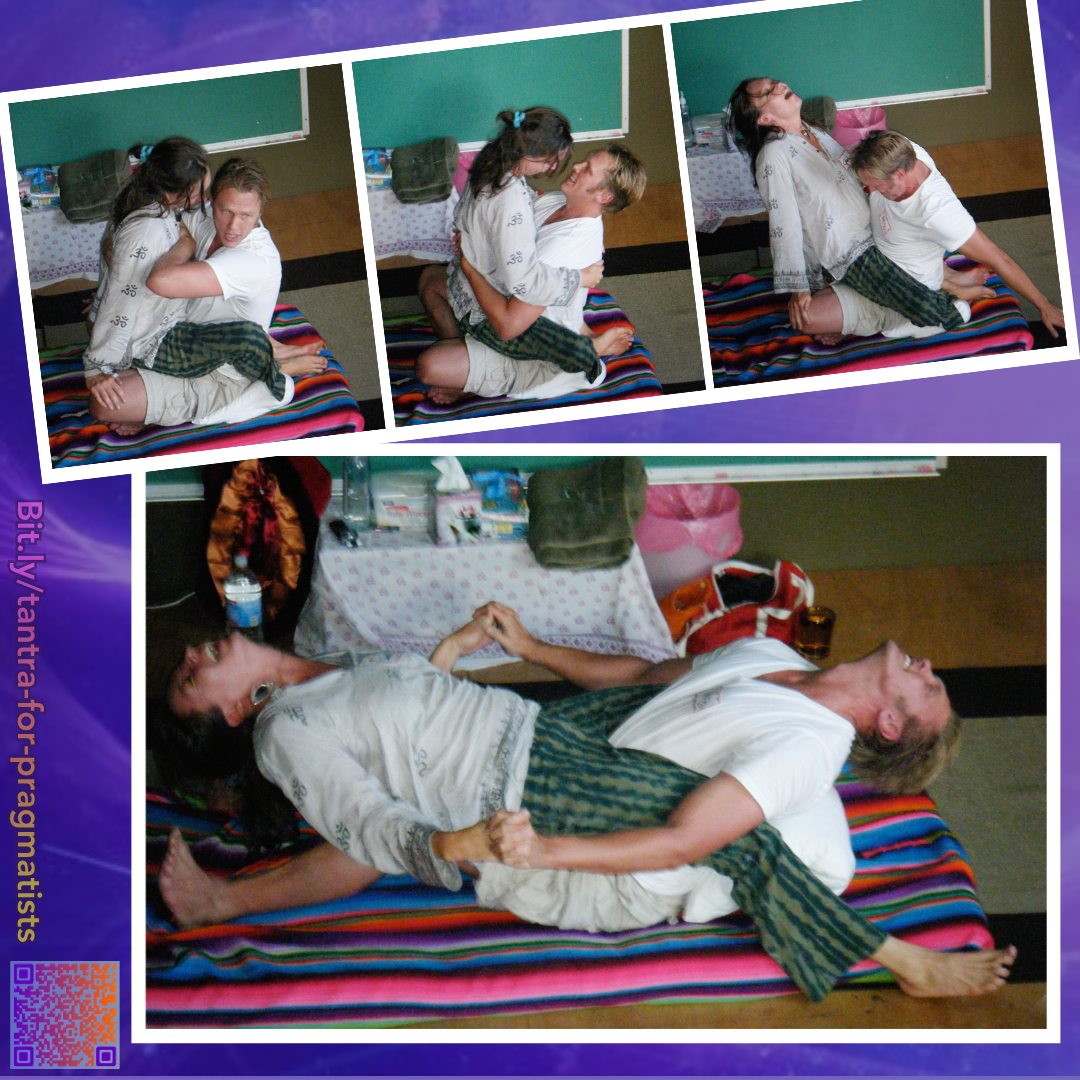
🌟 Tantra for Pragmatists & Beginners 🌟
It’s a playful, down-to-earth introduction to Tantra and Sacred Sexuality designed specifically for curious humans, skeptics, beginners, and practical-minded people.
No needing to “believe” in anything mystical.
No pressure to become woo-woo.
No needing to buy flowy pants. 😄
Just practical tools, better understanding, and new ways to explore connection, intimacy, sensation, and pleasure.
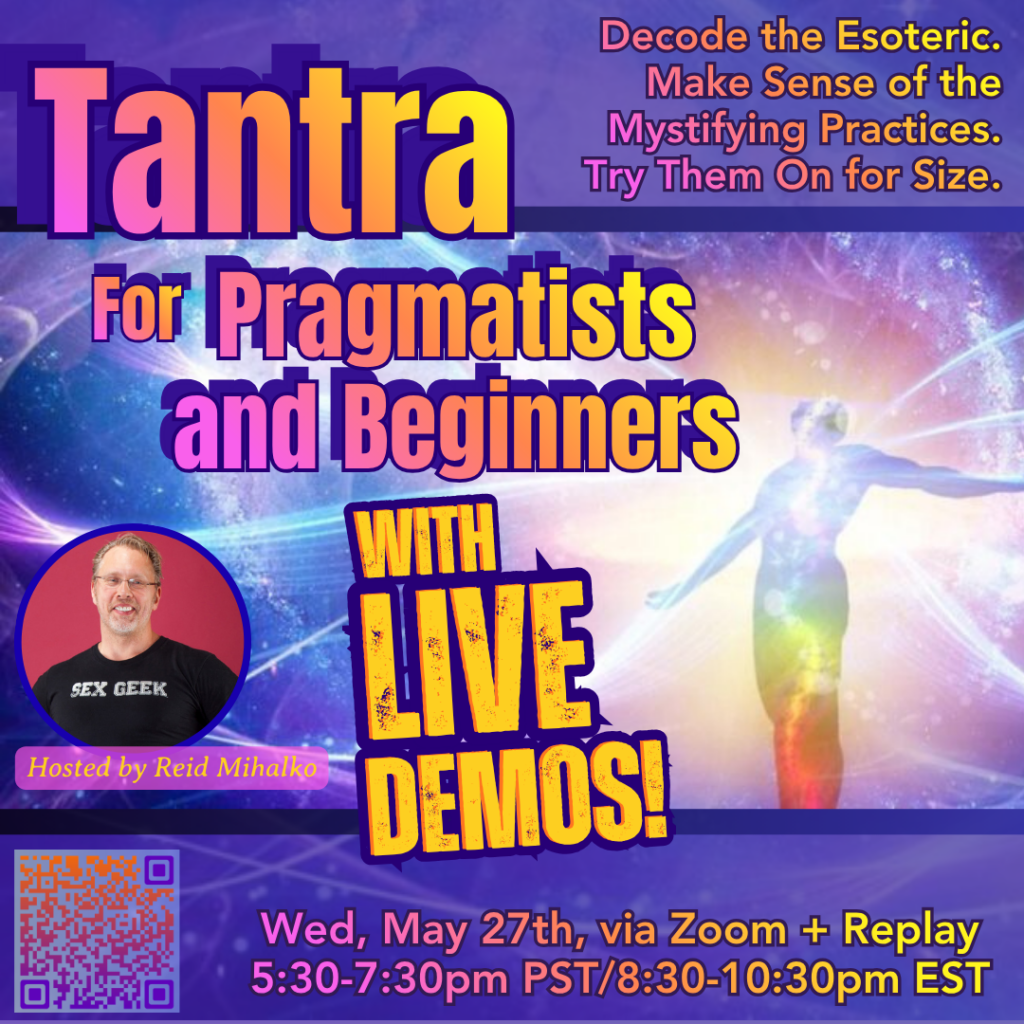
Date and Time: Wednesday, May 27 · 5:30-7:30 pm EDT / 8:30-10:30 pm EDT
Where: Virtually on ZOOM, with a replay available to all ticket holders for 7-days after the call!
Join us for a mind-blowing event that combines spirituality and practicality! Discover the secrets of Tantra and learn how to incorporate its principles into your everyday life. This event is perfect for pragmatists who want to explore their sensual side while keeping their feet firmly planted on the ground. Reid Mihalko’s unique approach will help you navigate the complexities of intimacy and connection in a way that is both practical and fulfilling.
Warmly,
REiD
P.S. Even if Tantra itself never becomes “your thing,” PLEASE JOIN US! Why? Because understanding how breath, attention, nervous system regulation, anticipation, and embodied awareness affect intimacy can radically improve connection and pleasure in everyday life.